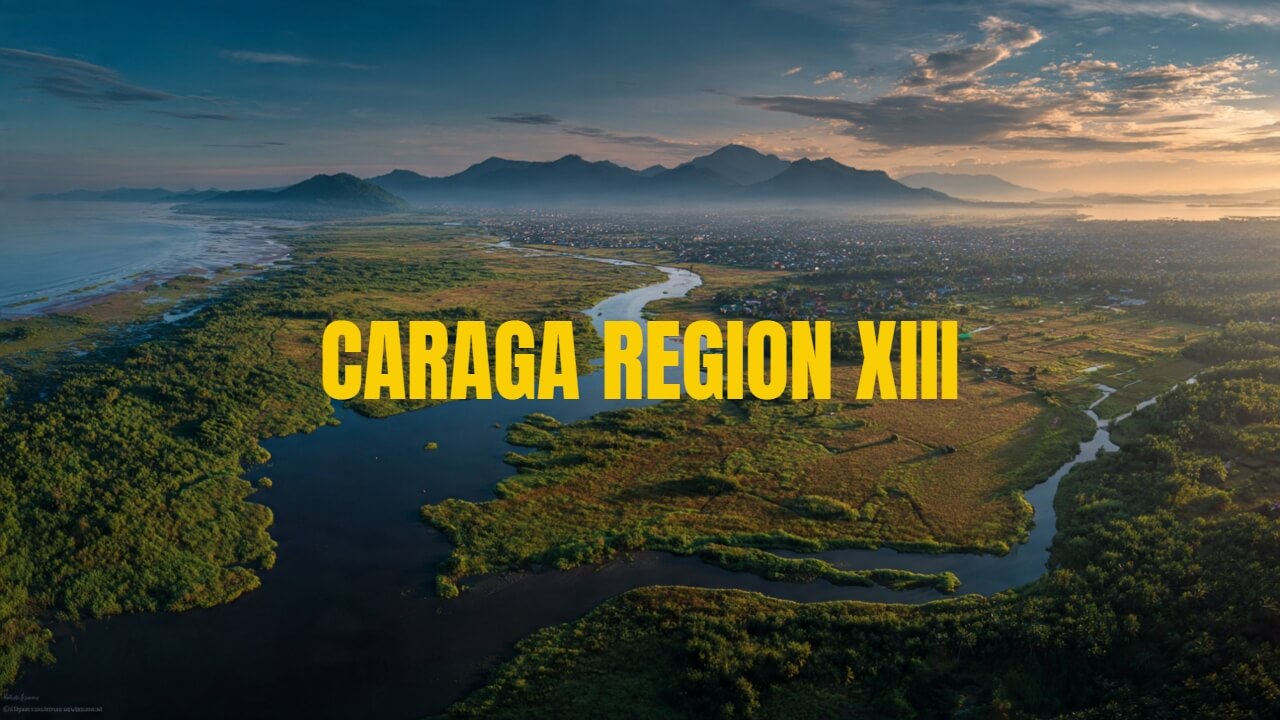
Located in the northeastern corridor of Mindanao, Caraga Region XIII is a land shaped by ancient maritime history, vast forestlands, and resilient communities. Often described as one of the Philippines’ last ecological frontiers, Caraga balances rich natural resources, diverse cultures, and an economy steadily gaining national significance. With Butuan City as its regional center, Caraga plays a vital role in agriculture, mining, services, and eco-tourism.
FTC Disclosure: www.i-travelph.com may receive financial compensation when the affiliate link(s) on this page are clicked on, and a purchase is made.
Caraga Region XIII
Nature, Heritage, and Emerging Growth in Northeastern Mindanao
Administrative Region: Cities, Towns, and Barangays
Caraga consists of five provinces, six cities, 67 municipalities, and over 1,300 barangays, forming a complex yet well-connected administrative structure.
Provinces
- Agusan del Norte
- Agusan del Sur
- Surigao del Norte
- Surigao del Sur
- Dinagat Islands
Cities
- Butuan City (Highly Urbanized City and Regional Center)
- Cabadbaran City
- Bayugan City
- Surigao City
- Bislig City
- Tandag City
Barangays serve as the grassroots units of governance, where local traditions, agriculture, and community life are most deeply rooted.
History: Caraga Region XIII
Caraga’s history predates Spanish colonization by centuries. Early records and archaeological discoveries show that Butuan was a major trading port as early as the 10th century. The discovery of ancient balangay boats confirms Caraga’s role in pre-colonial Southeast Asian maritime trade.
The region takes its name from the “Kalagan” people, known for their bravery and resistance to foreign incursions. During Spanish rule, Caraga was recognized for its strategic importance, though it remained relatively independent due to its terrain and strong local leadership.
In 1995, Caraga was formally established as Region XIII, consolidating its provinces into a distinct administrative region to accelerate development and governance.
Geography and Location: Caraga Region XIII
Caraga occupies the northeastern portion of Mindanao, bordered by:
- The Philippine Sea and the Pacific Ocean to the east
- Surigao Strait and Butuan Bay to the north
- Davao and Northern Mindanao regions to the south and west
It spans approximately 18,800 square kilometers, with forests covering nearly 70% of the land area — one of the highest forest cover ratios in the country.
Terrain and Natural Features: Caraga Region XIII
The region’s terrain is diverse and dramatic:
- Mountain ranges and rolling hills
- Vast river systems, including the Agusan River Basin
- Coastal plains and white-sand shorelines
- Wetlands such as the Agusan Marsh Wildlife Sanctuary
- Freshwater bodies like Lake Mainit
This varied landscape supports agriculture, fisheries, hydropower potential, and rich biodiversity.
Environment and Wildlife
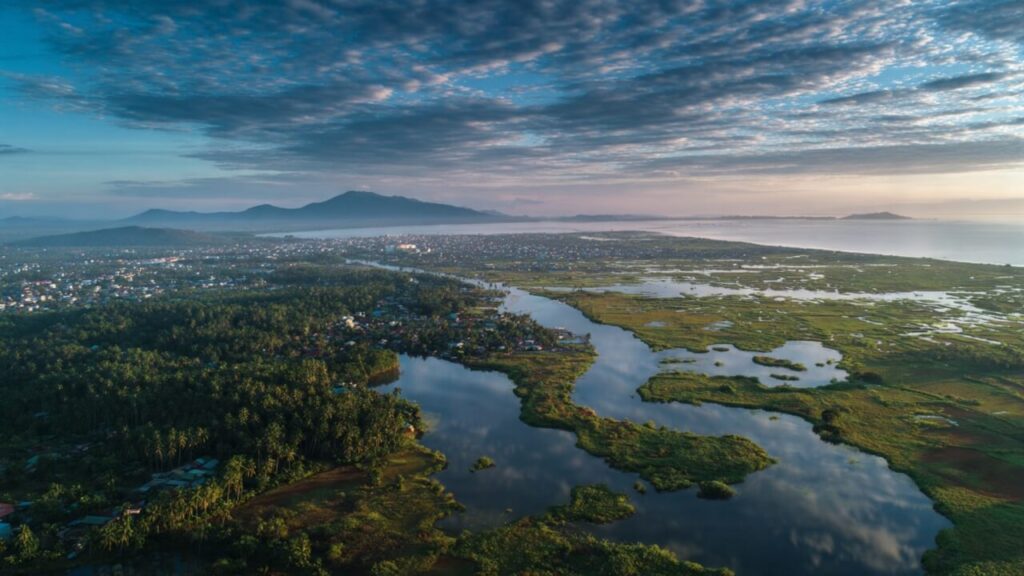
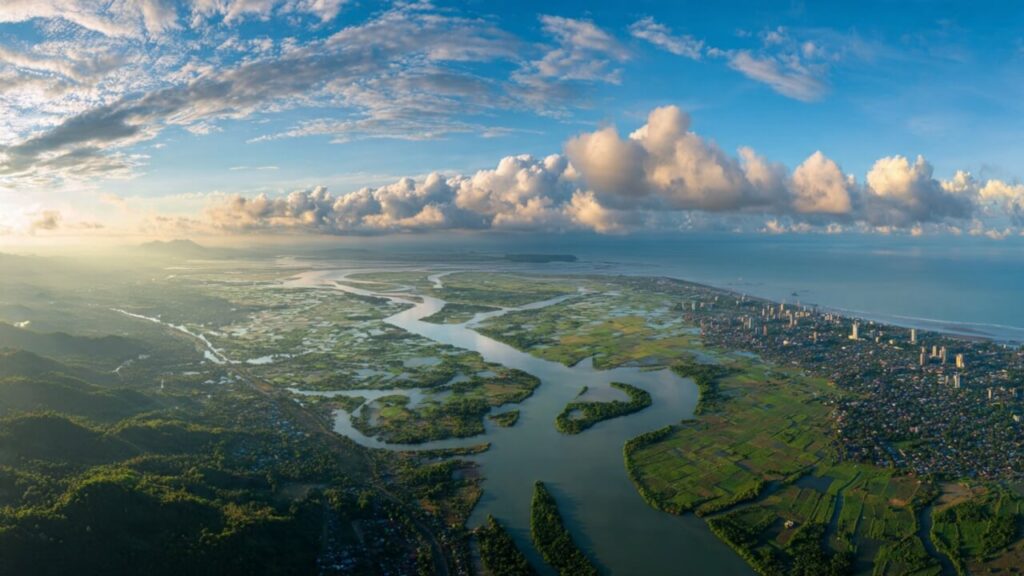
Caraga is one of the most ecologically significant regions in the Philippines. Its forests are home to endemic species of birds, mammals, and plants. Agusan Marsh serves as a refuge for migratory birds and aquatic wildlife, while coastal waters support coral reefs and fisheries.
Environmental protection and sustainable resource management remain key priorities, especially in balancing mining, agriculture, and conservation.
Climate and Weather
Caraga experiences a Type II tropical climate, meaning:
- No distinct dry season
- Rainfall throughout the year
- Heavier rains typically occur from November to February.
Average temperatures range around 26–28°C, making the region lush and green year-round, though eastern coastal areas are more exposed to typhoons.
Caraga Region XIII: Demographics
The Caraga region is home to around 2.8 million residents. Most of the population increase is occurring in urban hubs such as Butuan City. Rural communities remain dominant, particularly in agricultural and forested areas.
Languages
The region is linguistically diverse:
- Cebuano – most widely spoken
- Surigaonon and Kamayo – coastal provinces
- Butuanon – parts of Agusan del Norte
- Indigenous languages spoken by Manobo, Mamanwa, Higa-onon, and other groups
- Filipino and English – official and educational use
Religion and Cultural Groups
Christianity, particularly Roman Catholicism, is the dominant religion. Protestant denominations are also present, alongside enduring indigenous spiritual traditions.
Caraga’s indigenous peoples contribute significantly to the region’s cultural identity, preserving traditional crafts, music, rituals, and ecological knowledge.
Poverty Index and Social Development
Despite abundant resources, Caraga has historically recorded a higher poverty incidence than the national average. This is largely due to:
- Dependence on agriculture and extractive industries
- Geographic isolation of rural communities
- Infrastructure and access challenges
Ongoing government and private-sector programs aim to improve livelihoods, education, and connectivity.
Regional Economy
#sponsored
| PRODUCT | PRODUCT |
| LAZADA | SHOPEE |
Gross Regional Domestic Product (GRDP)
Caraga’s economy has gained momentum in recent years. Its GRDP exceeds ₱360 billion, with growth driven primarily by:
- Services
- Construction
- Industry and mining
The region is consistently among the fastest-growing economies in the Philippines, despite contributing a smaller share to the national GDP.
Agriculture and Fisheries
Agriculture remains the backbone of rural Caraga. Key products include:
- Rice and corn
- Coconut, banana, and oil palm
- Rubber and root crops
- Fishery products such as milkfish, crabs, and prawns
The fertile Agusan River Basin supports extensive farming and irrigation systems.
Industry and Natural Resources
Caraga is rich in mineral resources, including:
- Nickel
- Gold
- Chromite
- Silver and manganese
Mining and quarrying contribute significantly to regional income, alongside forestry, processing, and emerging manufacturing activities.
#sponsored
Accommodation
| AGODA | HILTON |
| PARTNERIZE | EXPEDIA |
| EBAY | WALMART |
Services, Trade, and Tourism
| PRODUCTS | PRODUCTS |
| EBAY | IMPACT RADIOUS |
| LINKSHARE | TRADETRACKER |
| PAIDONRESULT |
The services sector accounts for more than half of Caraga’s economic output. Tourism continues to expand, anchored by:
- Siargao Island, an international surfing destination
- Waterfalls, caves, and forest parks
- Cultural and historical attractions in Butuan and Surigao
Read:
Conclusion
Caraga Region stands at the intersection of heritage and opportunity. Its ancient history, ecological wealth, and culturally diverse communities define its identity, while growing economic momentum signals a promising future. As sustainable development continues to take root, Caraga remains one of the Philippines’ most compelling regions — rich in story, spirit, and potential.
Summary:
The Caraga Region (Region XIII) is located in the northeastern part of Mindanao and serves as a vital gateway between the Philippine Sea and the country’s southern mainland. Anchored by Butuan City, the region is known for its ancient maritime heritage, vast forestlands, fertile river basins, and culturally diverse communities.
Caraga, consisting of five provinces and six cities, is a significant contributor to agriculture, mining, services, and eco-tourism industries. Its economy continues to expand, with a Gross Regional Domestic Product exceeding ₱360 billion, making it one of the fastest-growing regions in the Philippines. Agriculture remains the backbone of rural livelihoods, while mining, construction, and tourism—especially in destinations like Siargao Island—drive investment and employment.
Rich in biodiversity and home to the Agusan Marsh Wildlife Sanctuary, Caraga is both an ecological stronghold and a region facing development challenges, including higher-than-average poverty incidence. As infrastructure, governance, and sustainable practices improve, Caraga stands poised to transform its natural and cultural wealth into long-term, inclusive growth.
FTC Disclosure: www.i-travelph.com may receive financial compensation when the affiliate link(s) on this page are clicked on, and a purchase is made.
#sponsored